


The Hazards of De-Icing Salt & Historic Masonry


When a winter storm approaches, everyone wants to make sure they are prepared. The refrigerator gets stocked with essentials, batteries charged, and salt ready for the sidewalk. However, is that really the right thing to do for the health of our buildings and sidewalks?
Putting down de-icing salt is standard procedure across the nation and there is no debating that it can provide clear walking and driving paths. However, the power of salt should not be ignored, especially when considering historic masonry.
The Dangers
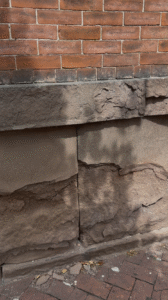
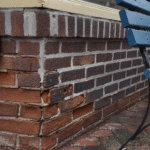
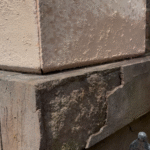
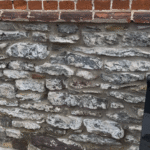
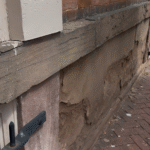
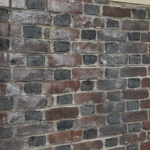
A choice that takes just a moment can have long lasting damages. When snow and ice melt, the water–and materials within the water such as salt–are absorbed by the mortar and masonry units. This can result in efflorescence and subflorescence, often causing damage to historic brick and stone through spalling and delamination. This problem is exacerbated when a historic building was improperly repointed with Portland cement based materials that don’t allow for the proper flow of moisture away from the masonry units the way lime mortars do.
The Environment
Harsh salts are not only harmful to buildings and pathways; they also can pollute watersheds. The accumulation of a neighborhood of homes using de-icing salt that are washed into storm drains with the snowmelt can harm plantlife and create dead-zones within rivers/streams.
The Available Products
The New York Landmarks Conservancy has an excellent summary of the available products for de-icing and the considerations to be taken when putting down salts.
- Sodium chloride, also known as rock salt, is the most common deicing salt. Rock salt releases the highest amount of chloride when it dissolves. Chloride can damage concrete and metal. It also can pollute streams, rivers and lakes. It should be avoided.
- Calcium chloride is another de-icing salt. It comes in the form of rounded white pellets. It can cause skin irritation if your hands are moist when handling it. Concentrations of calcium chloride can chemically attack concrete.
- Potassium chloride is not a skin irritant and does not harm vegetation. It only melts ice when the air temperature is above 15 F. but when combined with other chemicals it can melt ice at lower temperatures. It is a good choice.
- Magnesium chloride is the newest deicing salt. It continues to melt snow and ice until the temperature reaches -13 F. The salt releases 40% less chloride into the environment than either rock salt or calcium chloride.

A Side Benefit of Saint-Astier® NHLs
Saint-Astier® Natural Hydraulic Lime has lower levels of iron and alumina content as opposed to the ocher/tan (clayey) colored NHLs mostly coming from Germany, Portugal and Spain. Higher iron and alumina content of tan NHLs may result in issues with expansion three to five years after the original material installations. A delayed ettringite formation resulting from salt crystallization exacerbates expansion. The delayed ettringite formation happens when sulphates or gypsums are transported by water movement, within the wall, from capillary rise and wind driven rain. Capillary rise, coupled with a delayed ettringite formation from higher alumina containing NHLs, accelerates negative alkali-silica reactions in all wet conditions. Subsequently, any NHL with too high an alkali content (Na2O, K2O) in the binder is susceptible to react with the silica of the sand and/or of the stone as it is transported by water movement. This combined phenomena where there is too high of an alumina content mixed with a high alkali content will cause irreversible and unwanted material degradation when using other NHLs with these properties. With Saint-Astier NHL this does not happen and potentially damaging components or additions, such as gypsum or cement, make sulphate attack and alkali-silica reactions impossible. Existing salts in the building fabric will pass through and eventually wash off. NHLs that are tan and have higher clay components containing iron and alumina, results in the potential for future efflorescence hazards.
Conclusion
Care should always be given when clearing pathways to protect historic masonry. Choose products that won’t damage your building and are suitable for the environment. This winter, ensure you are ready to bundle up and that you have your shovel handy.